

Wed. Dec. 10, 2025
single: text module
The three-day Berlin Bootcamp marked the culmination of the Cybersecurity Launchpad, part of EIT Digital's European SPIN:RISE initiative and implemented by SIBB e.V. and 28DIGITAL. After an eight-week online phase, 16 researchers from eleven countries came to Berlin to further develop their cybersecurity projects and establish direct contacts in Berlin's innovation environment.
The program supports researchers on their journey from scientific discoveries to marketable applications, with a focus on entrepreneurship, IP strategies, and networking.
Day 1: Mindset, community, and pitching
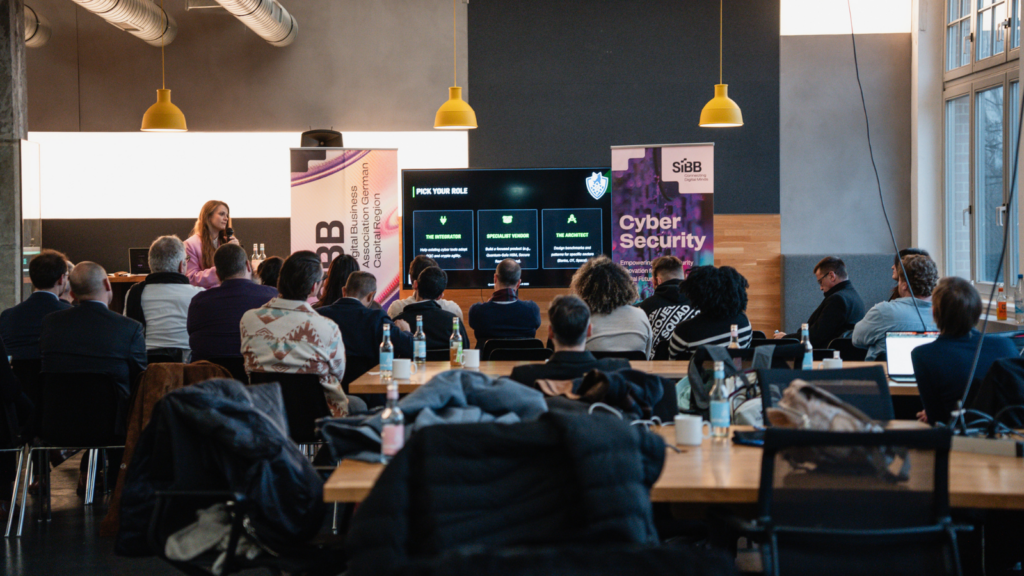
The first day at CIC Berlin was devoted to entrepreneurial mindset and getting to know each other. In her keynote speech, Anna Beata Kalisz Hedegaard, founder of Quantum Security Defense, encouraged participants to build confidence in their own expertise and recognize opportunities beyond the academic environment.
Maria Ksenia Witte then led a community-building exercise that encouraged reflection and discussion. The group developed a shared understanding of motivation and roles in the context of founding a company, which laid the foundation for the days ahead.
In the afternoon, Darina Mamonova led a session on pitching and networking. Participants worked on short, clear project pitches and received direct feedback on structure, impact, and comprehensibility—an important step in communicating complex research in an understandable way.
single: text module
The three-day Berlin Bootcamp marked the culmination of the Cybersecurity Launchpad, part of EIT Digital's European SPIN:RISE initiative and implemented by SIBB e.V. and 28DIGITAL. After an eight-week online phase, 16 researchers from eleven countries came to Berlin to further develop their cybersecurity projects and establish direct contacts in Berlin's innovation environment.
The program supports researchers on their journey from scientific discoveries to marketable applications, with a focus on entrepreneurship, IP strategies, and networking.
Day 1: Mindset, community, and pitching
The first day at CIC Berlin was devoted to entrepreneurial mindset and getting to know each other. In her keynote speech, Anna Beata Kalisz Hedegaard, founder of Quantum Security Defense, encouraged participants to build confidence in their own expertise and recognize opportunities beyond the academic environment.
Maria Ksenia Witte then led a community-building exercise that encouraged reflection and discussion. The group developed a shared understanding of motivation and roles in the context of founding a company, which laid the foundation for the days ahead.
In the afternoon, Darina Mamonova led a session on pitching and networking. Participants worked on short, clear project pitches and received direct feedback on structure, impact, and comprehensibility—an important step in communicating complex research in an understandable way.
single: image-slider




single: text module
Day 2: Exchange with cybersecurity and IP strategy experts
The second day focused on IP valorization and technology transfer, a central element of SPIN:RISE.
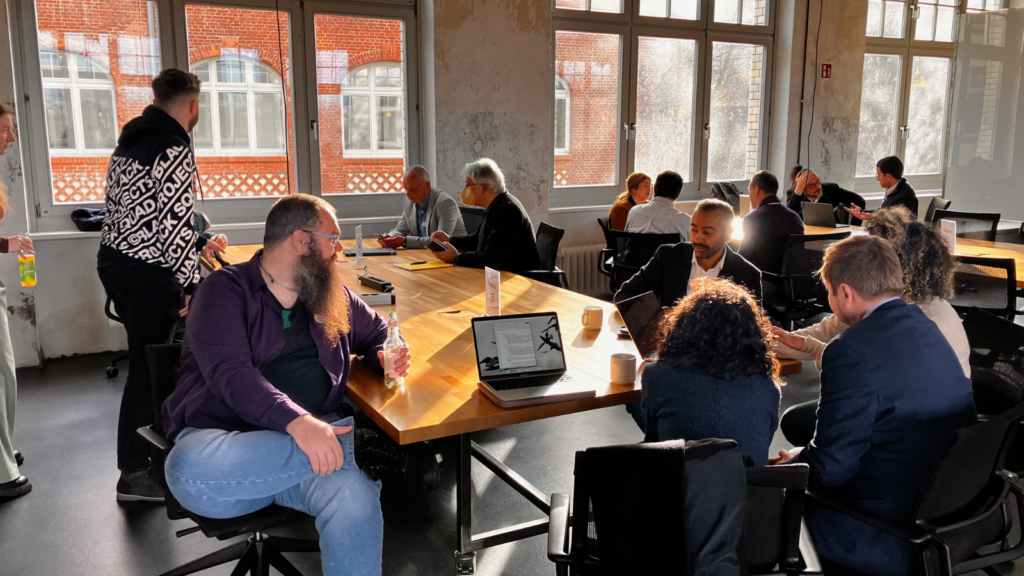
At the IP World Café, curated by Mustafa Cakir (RTTP, QPIP), researchers received support from experts in IP law and knowledge and technology transfer. Topics included patentability, protection strategies, and various ways of commercialization—particularly relevant for early-stage research projects.
In a keynote speech, Anna Hedegaard showed how security innovations can prepare for the coming "quantum age" and what opportunities new cryptographic requirements offer researchers.
In the afternoon, participants networked with representatives from Berlin-based IT companies, security teams, and startups at the Cybersecurity Experts Afternoon. Concrete use cases and their feasibility were discussed in open conversations.
Networking highlight: SIBB Christmas Reception
A special highlight took place afterwards: the invitation to the SIBB Xmas Reception. There, the researchers met directly with the digital economy, cybersecurity companies, and startups, and the experts gained fresh insights into current research trends. In a positive atmosphere, discussions arose about possible collaborations and pilot projects, among other topics. For many, it was their first opportunity to present their projects outside of the program to a broader professional audience, with immediate and practical feedback.
Day 3: Start-up practice, peer learning, and outlook
The third day provided practical insights into the reality of founding a company.
Marian Glaeser (brighter AI), an entrepreneur with a successful exit, openly shared his experiences with risk, team processes, and market decisions. Participants asked specific questions about the transition from research to entrepreneurship and gained valuable insights from the shared experiences of the successful cybersecurity founder.
The boot camp impressively demonstrated how European research and the Berlin ecosystem can benefit from each other. Participants leave the program with clearer strategies, valuable contacts, and a strengthened entrepreneurial perspective. We at SIBB are proud to have accompanied and motivated the researchers in their first steps toward starting their own businesses, and we will remain in contact with the participants and potentially continue to accompany them in the next steps.
Funded by:
single: text module
Day 2: Exchange with cybersecurity and IP strategy experts
The second day focused on IP valorization and technology transfer, a central element of SPIN:RISE.
At the IP World Café, curated by Mustafa Cakir (RTTP, QPIP), researchers received support from experts in IP law and knowledge and technology transfer. Topics included patentability, protection strategies, and various ways of commercialization—particularly relevant for early-stage research projects.
In a keynote speech, Anna Hedegaard showed how security innovations can prepare for the coming "quantum age" and what opportunities new cryptographic requirements offer researchers.
In the afternoon, participants networked with representatives from Berlin-based IT companies, security teams, and startups at the Cybersecurity Experts Afternoon. Concrete use cases and their feasibility were discussed in open conversations.
Networking highlight: SIBB Christmas Reception
A special highlight took place afterwards: the invitation to the SIBB Xmas Reception. There, the researchers met directly with the digital economy, cybersecurity companies, and startups, and the experts gained fresh insights into current research trends. In a positive atmosphere, discussions arose about possible collaborations and pilot projects, among other topics. For many, it was their first opportunity to present their projects outside of the program to a broader professional audience, with immediate and practical feedback.
Day 3: Start-up practice, peer learning, and outlook
The third day provided practical insights into the reality of founding a company.
Marian Glaeser (brighter AI), an entrepreneur with a successful exit, openly shared his experiences with risk, team processes, and market decisions. Participants asked specific questions about the transition from research to entrepreneurship and gained valuable insights from the shared experiences of the successful cybersecurity founder.
The boot camp impressively demonstrated how European research and the Berlin ecosystem can benefit from each other. Participants leave the program with clearer strategies, valuable contacts, and a strengthened entrepreneurial perspective. We at SIBB are proud to have accompanied and motivated the researchers in their first steps toward starting their own businesses, and we will remain in contact with the participants and potentially continue to accompany them in the next steps.
Funded by:
single: image module

single: image module